There are places in Romania that need no marketing. Bucovina is one of them. Its painted monasteries, recognised by UNESCO as masterpieces of world medieval art, the breathtaking mountain landscapes, the warm hospitality of the locals, and a cuisine that makes you forget about dieting — all of this makes Bucovina one of Romania’s most sought-after tourist destinations, year after year, regardless of the season.
As summer approaches, the flow of Romanian and foreign tourists heading to northern Moldova grows noticeably. And rightly so.
But there is a question many ask before setting off: how do you get there and, more importantly, how do you get around once you arrive?
Why more and more tourists choose to fly to Suceava
Driving to Bucovina from Bucharest or other major cities often means hours on the DN2 — a long road, congested in season and demanding for any driver. Many tourists, especially those coming from abroad or those who want to arrive well-rested, opt for the smarter alternative: flying to Suceava “Ștefan cel Mare” International Airport (SCV) and, immediately upon landing, picking up a rental car to explore the region at their own pace.
This combination — a direct flight plus a rental car picked up right at the airport or from Suceava train station — has become increasingly popular in recent years. Car hire at Suceava Airport or directly in the city via car hire at Suceava train station gives you the flexibility to head straight into Bucovina the moment you arrive, without wasting time. It is no surprise this formula has caught on: Bucovina cannot be visited from a single point. Monasteries, mountain resorts, natural attractions, and charming villages are spread over dozens of kilometres, and public transport does not cover these destinations efficiently. A rental car gives you complete freedom to create your own itinerary, without waiting at bus stops or making compromises.
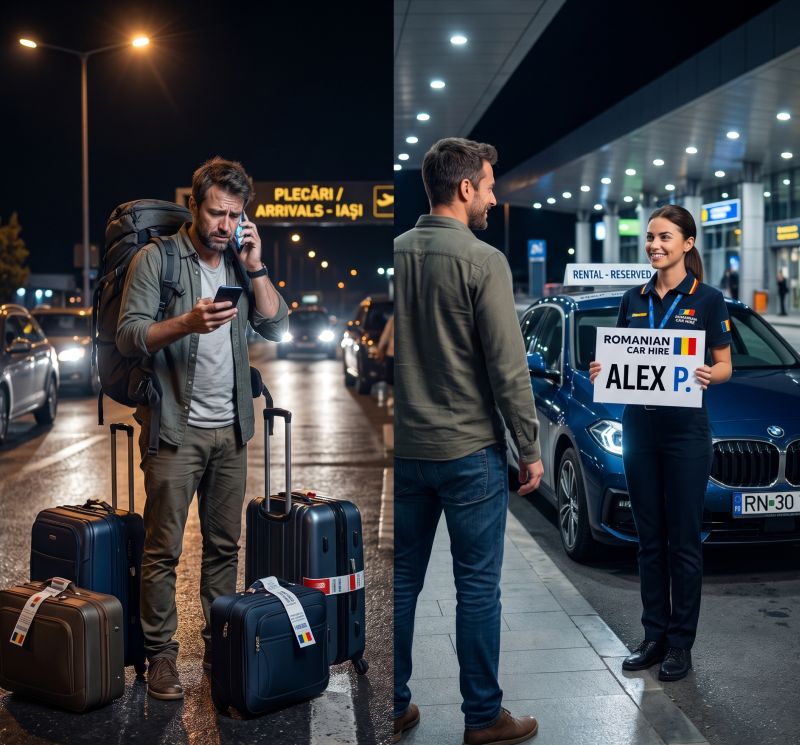
On the local market, several companies offer car hire services in Suceava, both at the airport and in the city. The difference lies in reading the terms carefully: some require substantial deposits blocked on your card, others include insurance in the final price, others do not. Romanian Car Hire stands out through complete transparency — the displayed price is the final price, with no hidden fees and no surprises at vehicle return. For most models in the fleet, no deposit is required, insurance is included, and delivery is made directly to the airport or train station at any hour, including at night. The fleet ranges from city cars to SUVs and minibuses, with manual or automatic transmission — exactly what you need on Bucovina’s mountain roads.
A practical tip for the beginning and end of your holiday: near Suceava Airport you will find the Bujor bakery and pastry shop, a locally renowned place where you can buy the authentic Bujor cozonac — with walnuts, cocoa, Turkish delight and poppy seeds — directly from the producer. A final (or first) Bucovinan treat, perfect to take home or enjoy on the road.
A complete 6-day itinerary departing and returning from Suceava
Bucovina has so much to offer that a short weekend does not do it justice. If you truly want to discover it, without rushing from one attraction to the next as if ticking boxes, 6 days are the reasonable minimum for this itinerary. Here is a circuit designed to follow the geographical logic of the region, not a list from a guidebook.
Throughout the route you will encounter stalls and small craft shops where local artisans sell handmade souvenirs: painted ceramics, decorated eggs, traditional blouses and towels with Bucovinan motifs, carved wooden objects. These are testimonies of living crafts, not industrial souvenirs. Do not ignore them — they are as much a part of the Bucovina experience as the monasteries and landscapes.
Day 1: Suceava, the city with medieval roots
Before heading to the monasteries, it is worth getting to know the city of Suceava, the former capital of medieval Moldavia.
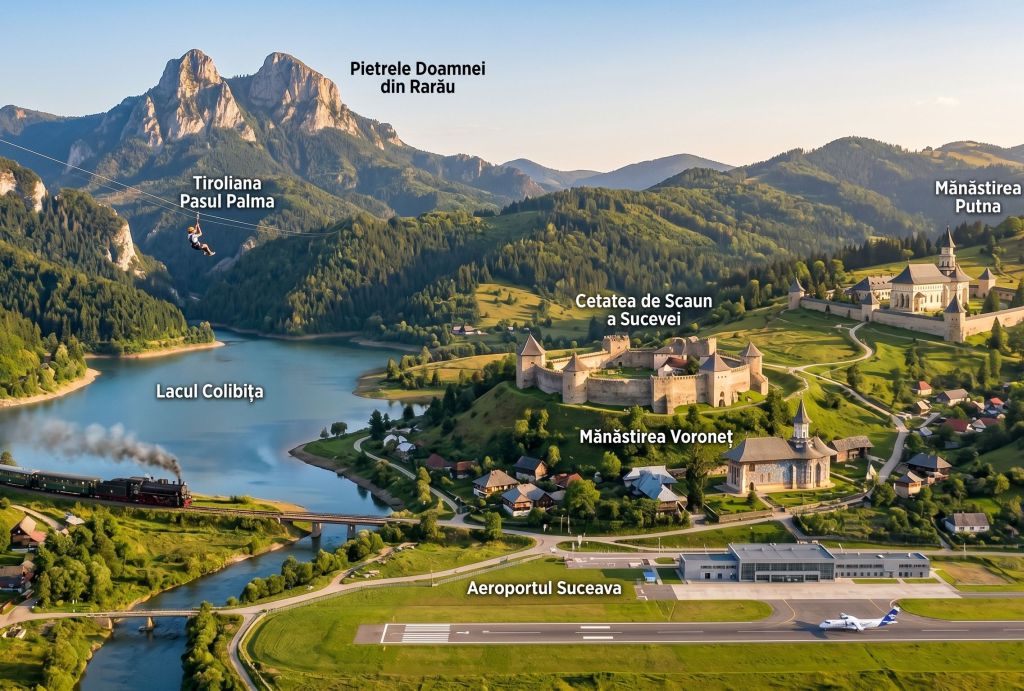
- The Throne Fortress of Suceava: an impressive monument, the residence of Stephen the Great, with a panoramic view over the city. A fitting start to understanding the history that gave rise to all the monasteries you will visit in the following days.
- The Monastery of Saint John the New: included in the UNESCO heritage, it houses the relics of Saint John the New and valuable interior paintings.
- The National Museum of Bucovina: for those who want to understand the history and culture of the region before exploring it.
- Evening in Suceava: a bean soup with smoked meat and sour bran broth, or a polenta with cheese and sour cream at a restaurant with local character. The city offers multiple options, from traditional cuisine restaurants to modern eateries.
Accommodation: Suceava — in the city centre you will find several comfortable hotels and guesthouses, perfectly suited for a restful night before departure.
Day 2: Rădăuți, Putna and Sucevița
Set off early in the morning towards the north-west, into the heart of northern Bucovina.
- Putna Monastery: the first and most important foundation of Stephen the Great, his eternal resting place. A place of pilgrimage and remarkable architectural beauty. The monastery museum preserves 15th-century manuscripts and embroideries, the princely throne of Petru Rareș, and a collection of old icons.
- Rădăuți: a small multicultural town, known for the Rădăuți Apiary, one of the largest in Europe. Worth a short stop at the local market where you can find traditional products: cheeses, honey, smoked meats.
- Sucevița Monastery: one of the largest and best-preserved in Bucovina, with impressive fortress walls. The famous frescoes, dominated by vivid green and bright red, and the celebrated “Ladder of Virtues” on the northern wall are unique in Christian iconography. Take your time — it is worth it.
Accommodation: Manor houses and guesthouses in the Sucevița area — on specialised booking websites you will find multiple options offering an authentic experience of northern Bucovina, with traditional breakfast, green courtyards, and complete peace. A night spent in this area prepares you perfectly for the next day.
Day 3: Palma Zipline, Moldovița and Vatra Moldoviței
The day with the greatest contrast: from pure adrenaline to spiritual contemplation, along some of the most beautiful mountain roads in Bucovina.
After a healthy breakfast at your guesthouse, you set off towards the Câmpulung Moldovenesc area along a winding mountain road, with views that deserve as many stops as you have patience for.
- Palma Pass Zipline, located at Ciumârna Pass, is the longest zipline in Romania and in Central Europe: 1,140 metres, speeds of up to 100 km/h, at 100 metres above the ground. There are two parallel ziplines — you can fly simultaneously with a companion — as well as the “Superman” option for the most daring. The view of the Bucovina mountains from that height is unforgettable. Transport to the departure point is included in the price, and access is also permitted for people with disabilities. A mandatory stop, regardless of age.
- Moldovița Monastery: filled with adrenaline, you head towards Vatra Moldoviței along the same winding mountain roads. The monastery, built in 1532 for Petru Rareș, impresses with its exterior frescoes on a golden-yellow background. The famous scene “The Siege of Constantinople” on the southern wall is one of the most complex historical representations in Romanian medieval art.
- Hutulca Narrow-Gauge Railway: in the same area of the Moldova Valley, a truly unique experience — a journey on a steam-powered train through wild mountain valleys, among forests and fairy-tale landscapes. The Hutulca narrow-gauge railway is one of the few functional heritage railways in Romania and offers a unique perspective on mountain Bucovina, impossible to experience any other way. Perfect for families with children, but equally appreciated by adults — few tourists leave without saying it was one of the most beautiful experiences of their holiday.
Accommodation: If you wish to experience more of the mountain area — clean air, low pollution, nature right outside your window — in Vatra Moldoviței there are rustic guesthouses at very reasonable prices, where peace and authenticity are guaranteed. An excellent choice for those who truly want to feel the slow, restorative rhythm of deep Bucovina. If you prefer more comfort or activity, continue towards Vatra Dornei for Day 4.
Day 4: Vatra Dornei, Lake Colibița, Rarău and Câmpulung Moldovenesc
The most varied day of the itinerary: a spa resort, a mountain lake, mineral springs, a trout farm, a mountain peak, and a museum — all in one well-planned day.
If you slept in Vatra Moldoviței, in the morning you head towards Vatra Dornei (approximately 60 km). If you chose to stay in Vatra Dornei from the previous evening, you can start directly.
Vatra Dornei is Bucovina’s reference spa resort, situated at the confluence of the Dorna and Bistrița rivers, surrounded by mountains. Its Austro-Hungarian period architecture gives it a special charm, hard to find elsewhere in Moldova. The resort offers multiple accommodation options, from locally-themed guesthouses to hotels, and the restaurant scene is varied — we recommend researching in advance for an authentic culinary experience.
- Lake Colibița: approximately 25 km from Vatra Dornei, a reservoir of wild beauty, ideal for a morning walk and some unforgettable photographs.
- Mineral springs: Vatra Dornei has well-known carbonated mineral waters, which locals drink regularly. There are several points where you can taste directly from the source.
- Lunch in Vatra Dornei: a lamb soup with lovage or a game stew — wild boar or venison — dishes specific to the mountain area, with local ingredients.
- Evening: do not miss the central park and the baths pavilion, with Austro-Hungarian period architecture unique in Moldova, ideal for an outdoor stroll before bed.
Around midday, head towards Pojorâta, from where you follow the road to Rarău — one of the most spectacular mountain drives in the Eastern Carpathians.
- Trout farms along the road to Rarău: on the valley road, do not hesitate to stop at one of the rustic trout farms in the area, where the trout is cooked fresh, directly from their own stock. You can enjoy it grilled, pan-fried in oil with cornmeal and flour, or as an extremely delicious trout sour soup. For dessert, papanași with sour cream and homemade jam are the perfect choice. The experience of a meal in this setting — with mountain water flowing nearby and forest air all around — is one of the memories tourists talk about most after returning home. If it is not the right moment for a meal on the way up, you can save the stop at one of the trout farms for the return from the summit.
- Rarău: reachable by car at a considerable altitude, with views that make the entire trip worthwhile on their own. For the adventurous, an approximately one-hour walk on a marked trail will take you to Pietrele Doamnei (the Lady’s Rocks, impressive rock formations) — not to be missed.
Descending from Rarău, the evening concludes with a stop at the Wood Museum in Câmpulung Moldovenesc — the only museum of its kind in Romania, a fascinating collection that tells the story of woodworking in Bucovina over the centuries. Important: the museum is open Tuesday–Sunday, from 9:00 to 17:00, closed on Mondays — plan your time accordingly to make sure you do not miss this unique visit.
From here, continue to your accommodation in Gura Humorului.
Accommodation: Gura Humorului — the most lively tourist centre in Bucovina, with the greatest variety of accommodation options, from family guesthouses to hotels. Multiple restaurants, promenades, and markets with traditional products.
Day 5: Voroneț, Humor, Arbore and Gura Humorului
We saved the best for last. Day 5 is the day of Bucovina’s landmark monasteries.
Set off early in the morning — the morning light makes the frescoes look different from any other time of day.
- Voroneț Monastery: nicknamed the “Sistine Chapel of the East”, world-famous for Voroneț Blue, a pigment whose manufacturing secret has not been deciphered to this day. The “Last Judgement” scene on the western wall is a masterpiece of European medieval art. If you visit only one attraction in Bucovina, let it be this one. Allow at least an hour — do not rush.
- Humor Monastery: 5 km from Gura Humorului, with paintings in warm shades of red and brown, and a standalone watchtower rarely found in monastic architecture. A more intimate atmosphere compared to the larger monasteries.
- Arbore Monastery: less visited by tourists in a hurry, but remarkable: dominant shades of emerald green, no bell tower, and a peace you feel differently from the monasteries with heavy visitor traffic. Worth the detour from the main route.
Lunch in Gura Humorului — the local restaurants are not to be missed:
- Balmoș: polenta boiled in milk with burduf cheese and butter, the dish of Bucovinan shepherds, unlike any other polenta in Romania
- Grape-leaf sarmale with smoked meat and sour cream — a distinctive variant compared to the cabbage-leaf version from other regions
- Bucovinan papanași, made with fatty cottage cheese, sour cream, and homemade jam, from 100% natural and local products. A dessert that perfectly encapsulates the spirit of Bucovina: simple, authentic, and unmatched.
Evening in Gura Humorului: the promenade, the craft market, a tea or a beer on a terrace. The last evening in Bucovina.
Accommodation: Gura Humorului — second night, plenty of time so you do not need to rush the next morning.
Day 6: Relaxation and the return to Suceava
The last day does not have to be just a drive. Gura Humorului has one more card up its sleeve for the end of the holiday:
- Ariniș Recreation Park: a modern leisure and recreation complex, ideal for closing out the Bucovina holiday at a relaxed pace, before the journey home. One last morning in the fresh air, with family or as a couple, with no strict schedule.
- Cacica Salt Mine: on the road to Suceava, a stop that is well worth the detour — one of the oldest salt mines in Romania, with a history of over 200 years. At 40 metres underground, you will discover a world apart: impressive galleries, a Roman Catholic chapel carved entirely in salt, an underground lake and a microclimate with recognised therapeutic properties. The constant temperature of 12°C and the air saturated with salt aerosols make this visit not only a cultural experience but also a beneficial one for your health. A unique experience, little known to tourists in a hurry, but unforgettable for those who discover it.
- Shopping for the road: burduf cheese, honey, jams, Bucovinan cozonac, decorated eggs, or craft objects from local stalls. And, if the route to the airport allows, one last stop at the Bujor bakery near Suceava Airport — a cozonac bought directly from the producer is the best culinary souvenir you can take home from Bucovina.
The drive from Gura Humorului to Suceava (approximately 35 km) leaves plenty of time for all of this before returning the car at Suceava Airport or at Suceava train station and catching your flight or train home.
What not to miss from Bucovina’s cuisine
Bucovina eats differently from the rest of Romania. Austro-Hungarian, Ukrainian, and Polish influences have layered over the Moldavian tradition, resulting in a rich and distinctive cuisine:
- Balmoș: polenta boiled in milk with burduf cheese and butter, the dish of Bucovinan shepherds
- Grape-leaf sarmale with smoked meat and sour cream
- Bujor Cozonac with walnuts, cocoa, Turkish delight and poppy seeds, rich and aromatic
- Bean soup with smoked meat and sour bran broth, naturally acidulated with homemade bran broth
- Game stew: wild boar or venison, specific to mountain areas
- Fresh trout grilled, pan-fried with cornmeal in a cauldron, or in a sour soup, directly from a fish farm, in a rustic mountain setting
- Bucovinan papanași with sweet cottage cheese, sour cream and homemade jam, from natural local products
- Burduf cheese and fresh curd from local producers, at the markets in Câmpulung Moldovenesc, Gura Humorului or Vatra Dornei
Avoid restaurants on the main roadsides with standardised tourist menus. Step into the courtyards of locally-themed guesthouses or ask the locals — most of the time, the best food is cooked in unexpected kitchens.
Bucovina, a land that deserves more than a weekend
Many tourists make the mistake of treating Bucovina as a two-day destination where they tick off 3–4 monasteries and leave. The region deserves more — both in terms of natural beauty and cultural and gastronomic depth.
A 6-day circuit, with a car at your disposal, lets you stop wherever you like, return at sunset to a monastery that moved you, detour along a forest road, chat with a woodcarver, or buy a jar of honey directly from the beekeeper in the yard by the road.
Bucovina does not hurry. Neither should you.
Remember that Romanian Car Hire operates at the airports of Iași, Bacău, Suceava, Bucharest Otopeni, Cluj, Craiova, Brașov, Chișinău and Târgu Mureș. Whenever you need a rental car, call us at +40 741 644 169 and we will be there for you.
Don’t forget to check the other articles available at the bottom of this page to make sure you have no issues when renting a car in Romania.